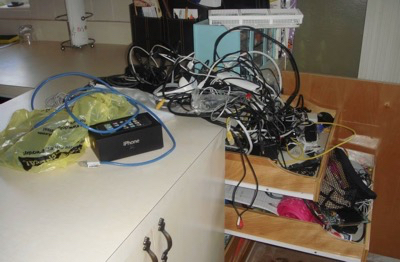
Clutter is a common problem in today’s society. Families are busier than ever trying to keep up with their careers, children in extra-curricular activities, household responsibilities, mail, errands, business and personal travel, email, etc. At some point, most people get overwhelmed. Clutter seems to appear overnight and is hard to tackle for most people. In some cases, in my opinion, it is also an outward physical manifestation of something that is going on inside, generally stemming from emotional distress. People that are generally pushed to the breaking point are usually in the midst of a major life transition. The transitions in life I see that cause the most chaos and clutter in someone’s life are as follows:
- Death of an immediate family member

- Divorce
- Infidelity
- Empty nest
- Job transition
- Medical conditions
- Aging
- New baby
“Normal” everyday life is stressful enough, but when people are going through these transitions, stress and anxiety escalate. Their main focus is on the situation at hand, and not on the physical contents of the home or office. The pain of the clutter doesn’t generally manifest itself until the current situation is handled and the person realizes that they want to get their life back, put order back into their home or office, and are too overwhelmed at that point and don’t know where to start. Also during major transitions in life, stress increases even more so because there is either a lack of time or money to address the situation, or people sometimes don’t have the knowledge or skills to adapt and deal with the clutter thus feeling helpless. I have observed first-hand the correlation between clutter, stress, unbalanced lifestyles and increased medical issues. The more clutter I see, the more prescription drugs I see in the cabinet. The more clutter I see, the more unhealthy food I see in the pantry. The more clutter I see, the more I hear clients complain of medical conditions and the inability to sleep, rest or relax.
It is very important to follow some simple steps in order to manage the stress and move forward into the next phase of life.
- Know that you are not alone – many people have been in similar situations
- Seek the advice of your doctor as to how to best manage the stress
- Rely on your friends, family, and other people for support
- Get plenty of rest, eat balanced meals and exercise regularly
- Call a decluttering professional for help if you get stuck
 I think the real truth about where the clutter started and how to rid yourself of it once and for all starts with the act of physically decluttering a particular space and in some cases your entire home. Remember, it took you quite some time to get cluttered and you can’t expect for it to disappear overnight. You will need to be ready to work thru the process and be open to learning what the physical clutter is trying to tell you about what’s going on inside. By working thru the physical process of decluttering, you will most likely find the answer about what clutter has to do with it. Once you discover this, you can then continue taking the steps to heal yourself physically and emotionally.
Sharon Toston, The Clutter Coach
www.commandyourclutter.com
727.420.1746

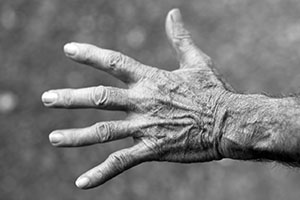 Arthritis is a painful and oftentimes debilitating condition that’s characterized by inflammation within one or more joints. According to the Centers For Disease Control and Prevention (CDC), 1 in 2 people will develop osteoarthritis of the knee by the age of 85. It’s important to note, however, that there are several different types of arthritis, with osteoarthritis being just one. Other common types include rheumatoid arthritis, gout, septic arthritis, Still’s disease, and ankylosing spondylitis.
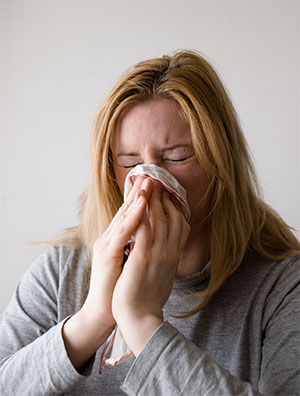 Do you suffer from allergies or asthma? It’s a little-known fact that these two conditions are directly linked to each other. Asthma, which affects roughly one in 12 people according to the CDC, is characterized by spasms of the small airways and inflammation. Furthermore, about 90% of children under the age of 16 with asthma have allergies, while 70% of people between the ages of 16 and 30 have allergies, and 50% of adults over the age of 40 have allergies.
  Irritable Bowel Syndrome (IBS) is a common disease suffered by an estimated 25-45 million people in the United States. Symptoms include chronic abdominal pain, bloating, excess gas and irregular bowel movements. Symptoms can be brought on by a number of triggers including anxiety, insomnia and stress. Although there is no known cure to IBS, there are numerous alternative treatments to prescription medication that can help relieve symptoms.
  About 10 percent of couples struggle with infertility and an inability to conceive, according to the Centers for Disease Control. For those struggling to have children, fertility treatment can become tiring and expensive very quickly. There are numerous alternative treatments including Traditional Chinese Medicine (TCM) that have been thought to improve fertility.
 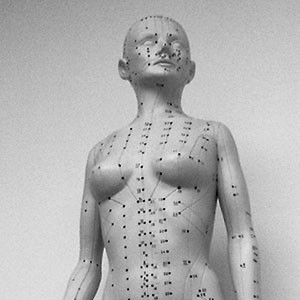 There’s a certain level of mysticism surrounding the ancient holistic practice of acupuncture. Those who haven’t tried it may view it as some sham practice with no real value or benefit. On the other hand, those who have tried are fully aware of its powerful effects on the human body.



 Cleaning
 2015 is the Year of The Goat in Chinese astrology. Ranking eighth in the long list of animals tied to the Chinese zodiac, people who are born under this sign are said to be calm, mild-mannered, good-hearted, sympathetic, dependable and intelligent. They also prefer to avoid being the center of attention – a trait that’s rare among other Chinese zodiacs. Of course, this is just the tip of the iceberg when it comes to the characteristics of the Year of The Goat.
